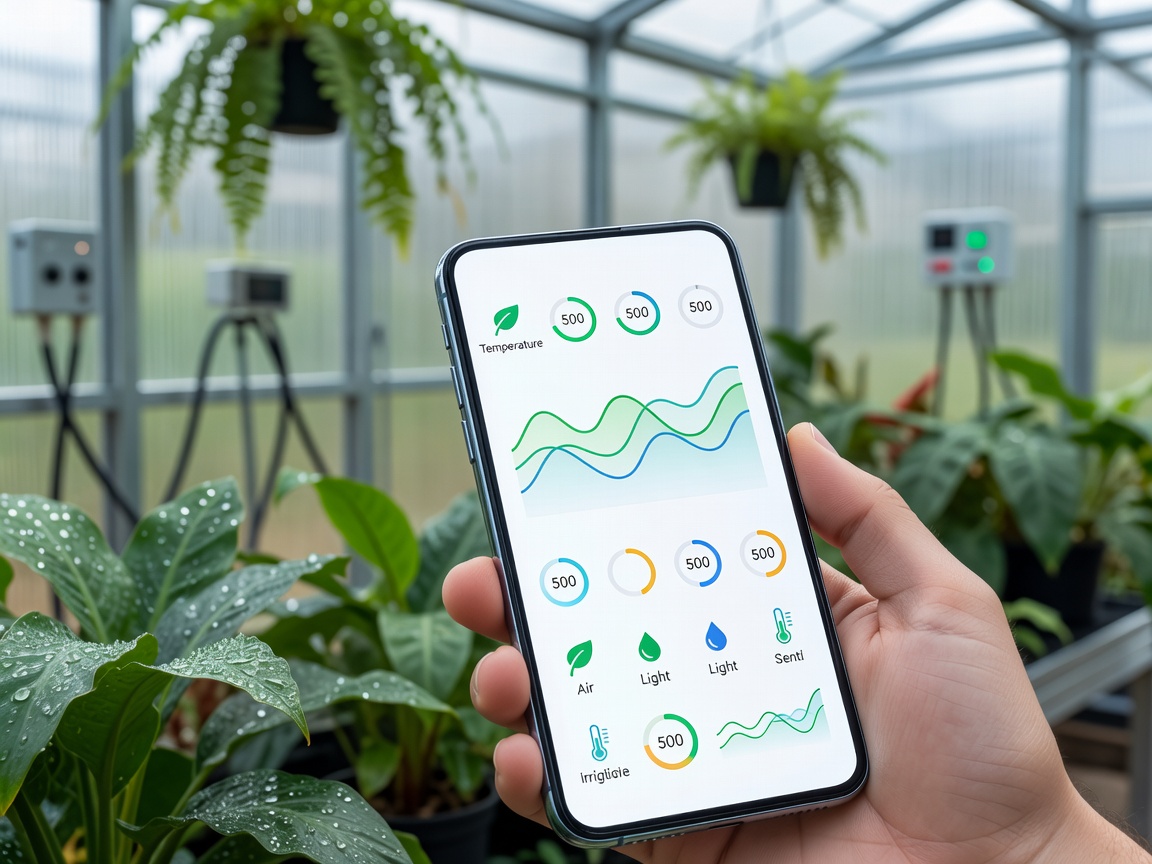
Eliminating Human Error
The defining advantage of an indoor greenhouse system is absolute control over the environment. However, managing lights, humidity, temperature, and watering schedules manually is incredibly labor-intensive. It only takes one forgotten watering cycle or a prolonged heat spike to severely damage a sensitive crop.
Smart automation bridges the gap between commercial agriculture and the home grower. By utilizing affordable sensors, microcontrollers, and smart-plug ecosystems, you can create a closed-loop system that reacts to environmental changes in real-time, requiring your intervention only for pruning, harvesting, and system maintenance.
The Foundation: Smart Plugs and Timers
The simplest and most immediate upgrade to any indoor greenhouse is the integration of smart plugs. At a bare minimum, grow lights must be on a rigid schedule to mimic natural photoperiods. In the vegetative phase, plants generally receive 18 hours of light and 6 hours of darkness. During the flowering phase, this shifts to a 12/12 cycle.
Mechanical dial timers are prone to drifting over time or failing entirely. WiFi-enabled smart plugs sync with network time protocols to ensure perfectly accurate switching. More importantly, they allow you to adjust schedules remotely via your smartphone and set up fail-safes (e.g., automatically cutting power to lights if the room temperature exceeds 85°F).
Environmental Controllers (VPD Management)
Advanced automation steps beyond simple scheduling and moves into reactive control. A central environmental controller utilizes localized probes to constantly monitor temperature and relative humidity. You program the controller with your target Vapor Pressure Deficit (VPD) or humidity range, and the device handles the rest.
- High Humidity Response: If humidity spikes after a watering event, the controller will automatically increase the speed of the exhaust fan to draw dry air into the tent.
- Low Humidity Response: In dry winter conditions, the controller can activate a connected humidifier until the target range is achieved.
By constantly adjusting the environment without human input, the plants experience a remarkably stable climate, entirely removing the stress of fluctuating conditions.
Automated Watering and Nutrient Delivery
Watering automation depends heavily on your chosen medium.
In soil systems, drip irrigation powered by a small submersible pump in a reservoir is highly effective. You can pair the pump with a precise seconds-timer, dialing in exact volumes of water delivered daily. Some advanced growers integrate soil moisture sensors that only trigger the pump when volumetric water content drops below a certain threshold.
In hydroponic setups, automation takes the form of top-off valves and automated dosing. A float valve in the main reservoir can be connected to a fresh water line, ensuring the water level never drops to a dangerous level. Commercial-grade setups use electronic dosing pumps that measure pH and Electrical Conductivity (EC) continuously, injecting micro-doses of nutrients or pH up/down solutions to maintain a perfect balance.
Data Logging and Refinement
Perhaps the most valuable aspect of smart greenhouse automation is data collection. Controllers log environmental metrics, creating graphs of temperature, humidity, and VPD over days and weeks. This data is invaluable for diagnosing issues. If your basil leaves are curling, you can check the logs to see if a brief temperature spike occurred while you were at work.
Automation does not replace the grower; it elevates them. By removing the tedious daily chores of hand-watering and fan-adjusting, you can focus on observing plant health, structural training, and maximizing your yields.